
Reclaimed & Sustainable Hardwood Flooring: Why Eco-Conscious Homeowners Are Making the Switch
By Metro Tiles & Flooring | Canada’s Trusted Tile & Flooring Experts
Hardwood flooring has always carried a tension — it’s a natural, beautiful material, but one that comes from trees. For homeowners who care about where their materials come from and what their renovation choices mean beyond the four walls of their home, that tension is worth thinking about. The good news is that the flooring industry has responded with options that are genuinely better for the environment without asking you to compromise on quality or beauty.
Here’s what eco-conscious hardwood flooring actually looks like in 2026 — and why more Ontario homeowners are making it part of their renovation decisions.
Reclaimed Hardwood: The Most Sustainable Floor You Can Install
Reclaimed hardwood is wood salvaged from old barns, factories, warehouses, and demolished buildings that would otherwise end up in a landfill. It’s cleaned, milled, and finished into flooring that carries both the beauty of old-growth timber and a story that new wood simply can’t offer.
Old-growth timber is denser, tighter-grained, and often harder than most commercially available hardwood today. Trees that took hundreds of years to grow produced wood with characteristics that fast-grown modern timber doesn’t replicate. A reclaimed floor isn’t just a sustainable choice — it’s often a higher quality material than what’s available new, with a depth of character and patina that no factory finish can manufacture.
The environmental case is equally strong. No new trees are harvested, no new forests are impacted, and material that already exists is given a second life. Before you buy, ask suppliers where the wood was salvaged from, whether it’s been properly dried and treated, and whether it’s been tested for lead paint — a real concern with wood from older structures. Work with a reputable supplier who can answer these questions clearly.
FSC-Certified Hardwood: Responsibly Sourced New Wood
For homeowners who want the reliability of new hardwood without the environmental compromise of unregulated logging, FSC certification is the standard to look for. The Forest Stewardship Council (FSC) certifies forests managed to strict environmental and social standards — protecting biodiversity, worker rights, and the long-term health of forest ecosystems.
Choosing FSC-certified hardwood means the wood in your floor can be traced back to a forest being managed responsibly — where harvest rates don’t exceed regrowth and where endangered species habitats are protected. It’s the most credible and widely recognised certification available, and it’s meaningfully better than uncertified wood of unknown origin. It looks identical to non-certified wood, installs the same way, and is available in most popular species at competitive price points.
Engineered Hardwood: More Wood, Less Waste
Engineered hardwood doesn’t always come up in sustainability conversations, but it probably should. A standard engineered plank uses a thin veneer of the desirable hardwood species over a plywood or HDF core — meaning a single tree yields significantly more flooring than if milled into solid planks. The core is typically made from fast-growing, more sustainably managed wood sources.
For Ontario homeowners specifically, engineered hardwood’s superior dimensional stability in variable-humidity environments means it’s less likely to need premature replacement. A floor that lasts longer is inherently more sustainable than one that needs replacing in fifteen years — longevity is one of the most underrated sustainability factors in any building material.
Locally Sourced Hardwood: Reducing the Supply Chain Footprint
How far a material has travelled to reach your home is an often overlooked sustainability consideration. Hardwood imported from overseas carries a significant transportation carbon footprint — and Ontario has access to excellent domestically produced hardwood. Hard maple, white ash, yellow birch, and red oak are all grown and milled domestically, often within the province. Choosing a locally sourced species supports Canadian forestry, reduces emissions, and keeps the supply chain transparent in a way that imported products often aren’t.
The Bottom Line
Sustainable hardwood flooring is a growing segment of the mainstream market, driven by homeowners who want their renovation decisions to reflect their values without compromising on quality or beauty. Reclaimed hardwood brings unmatched character and a second life to old-growth timber. FSC-certified wood ensures responsible sourcing. Engineered hardwood maximises yield. And locally sourced species keep the supply chain close to home.
Any one of these choices is a step in the right direction. Combined, they represent a flooring decision you can feel genuinely good about for a long time.
Explore Sustainable Flooring at Metro Tiles & Flooring
At Metro Tiles & Flooring, we believe beautiful flooring and responsible choices aren’t mutually exclusive. Our team can help you explore sustainable hardwood options that suit your home, your values, and your budget. Come visit us in store and let’s find a floor that feels as good as it looks.
🏪 Visit our showroom at 72 Devon Road, to touch and feel hundreds of porcelain and ceramic tile samples in every style imaginable.
📐 Book a free consultation — https://metrotilesandflooring.com/get-a-free-quote/
🚚 We supply and install — one trusted team from selection to grouting.
💬 Have a question? Call us today at (905) 450 – 0001
Because the right flooring doesn’t just look good — it feels right with every step.
Do Hardwood Floors Increase Home Value? What Buyers and Real Estate Agents Actually Say
By Metro Tiles & Flooring | Canada’s Trusted Tile & Flooring Experts
If you’re considering hardwood floors and wondering whether the investment will pay off when it comes time to sell, you’re asking exactly the right question. The short answer is yes — but the fuller answer is a little more nuanced, and understanding the details helps you make a smarter decision about where, what, and how much to install.
What Real Estate Agents Consistently Say
Ask almost any experienced real estate agent whether hardwood floors help sell a home and the answer is nearly always the same — yes, and noticeably so. Hardwood is one of the few interior features that agents specifically flag as a selling point in listings. It photographs well, shows well, and signals to buyers that the home has been maintained and upgraded with care.
In competitive Ontario markets, a home with hardwood floors will typically generate more interest and move faster than a comparable home with dated carpet or lower-end flooring, all else being equal. What agents are more cautious about is guaranteeing a specific dollar return — the value hardwood adds depends heavily on the neighbourhood, the overall condition of the home, and what comparable homes in the area are offering.
What Buyers Are Actually Looking For
Buyers in today’s market are increasingly flooring-literate. They know the difference between solid hardwood and LVP, they notice whether floors have been refinished recently, and many have hardwood on their mental checklist before they even walk through the door.
What buyers respond to most positively is hardwood in the main living areas — the entryway, living room, dining room, and connecting hallways. These are the spaces that form the first impression and where flooring has the most visual impact. Condition matters enormously too. Scratched or heavily worn hardwood can work against a seller, raising questions about maintenance. A well-maintained or recently refinished floor, on the other hand, is one of the most compelling features a home can offer at first showing.
What to Realistically Expect
Studies suggest hardwood floors can add anywhere from 1% to 5% to a home’s resale value depending on the market and quality of installation. On a $700,000 Ontario home, that’s a meaningful number.
More consistently reported is the return on refinishing existing hardwood. Refinishing costs a fraction of replacement and agents frequently cite it as one of the highest-return pre-sale improvements a homeowner can make. New hardwood installation before a sale is a bigger financial calculation — you’re unlikely to recoup 100% of the cost in the sale price, but you will sell faster and with less friction, which has its own real value.
Where Hardwood Adds the Most Value
The highest-impact areas are consistently the main floor living spaces — entryways, living rooms, dining rooms, and main hallways. Bedrooms with hardwood are a strong bonus. Kitchens and bathrooms are generally not where buyers prioritise hardwood, and practical alternatives like tile and LVP are just as well-received in those spaces.
Consistency matters as much as the wood itself. A home where hardwood runs through connected main living areas without awkward transitions feels cohesive and considered. Mismatched flooring between adjacent spaces can actually feel more disjointed than consistent, well-chosen flooring throughout — regardless of the price point.
The Bottom Line
Hardwood floors are consistently cited by real estate agents as a meaningful selling advantage, consistently requested by buyers, and consistently associated with homes that show well and sell faster. In Ontario’s competitive real estate market, a well-maintained hardwood floor is rarely a liability and frequently an asset.
If you already have hardwood, keeping it in good condition — or refinishing it before a sale — is one of the smartest investments available. If you’re installing new, focus on the main living areas, choose a species and finish with broad appeal, and make sure the installation is done well.
Invest in Your Home’s Value at Metro Tiles & Flooring
At Metro Tiles & Flooring, we carry a wide selection of hardwood and engineered hardwood flooring to suit every home, every budget, and every timeline. Whether you’re renovating for the long term or preparing a home for sale, our team can help you make the right flooring decision. Come visit us in store and let’s talk about what works best for your home and your goals.
🏪 Visit our showroom at 72 Devon Road, to touch and feel hundreds of porcelain and ceramic tile samples in every style imaginable.
📐 Book a free consultation — https://metrotilesandflooring.com/get-a-free-quote/
🚚 We supply and install — one trusted team from selection to grouting.
💬 Have a question? Call us today at (905) 450 – 0001
Because the right flooring doesn’t just take wear — it takes your home up a level.
Hardwood Flooring Trends for 2026: Warm Tones, Wide Planks, and the End of High Gloss
By Metro Tiles & Flooring | Canada’s Trusted Tile & Flooring Experts
Hardwood flooring doesn’t change as dramatically as fashion or tile trends — most people choose it with longevity in mind. But it does shift, slowly and meaningfully, and what feels current in 2026 looks noticeably different from what was popular five or ten years ago. Here’s where the market is sitting right now.
Warm Tones Are Back
The cool, grey-washed floors that dominated the last decade are fading fast. In their place, warm honey tones, natural oaks, and golden browns are taking over — and it’s not the orange-tinted look of the nineties. This is a more refined warmth. Think natural white oak with a light, barely-there finish. Think warm beige tones that complement linen, terracotta, and brass rather than competing with them. Grounded and timeless rather than cold and clinical.
Wide Planks Are Now the Expectation
Narrow strip hardwood has been losing ground for years, and in 2026 wide plank has essentially become the standard rather than the upgrade. Five, six, and even seven to eight inch widths are increasingly common. Wide planks show more natural grain, create fewer seams, and give rooms a calmer, more expansive feel — particularly in open-plan spaces. In Ontario homes with forced-air heating, maintaining indoor humidity with a humidifier is worth doing for any wide-plank installation to manage seasonal movement.
Matte and Satin Finishes Are Taking Over
High-gloss hardwood is on its way out, and for good reason. Matte and satin finishes are more forgiving of scratches and scuffs, easier to keep clean, and feel more natural and warm underfoot. A wide-plank white oak floor with a matte finish is one of the most quietly beautiful things a room can have — it recedes and lets the space breathe. The only context where higher gloss still makes sense is a very formal, traditional setting. Everywhere else, matte is the better call.
White Oak Is the Wood of the Moment
White oak has emerged as the clear favourite of the current design era. It has a beautiful, consistent grain, takes stain evenly, and in its natural state has a warm creamy tone that works with almost any interior palette. It’s also a genuinely hard, durable species — a practical choice for family homes and high-traffic areas. Red oak hasn’t disappeared, but its pinkish undertone is less compatible with today’s warm, earthy palettes and has been somewhat overshadowed as a result.
Natural Character Is In
Heavily uniform, machine-perfect floors are giving way to floors that celebrate the natural character of the wood — knots, grain variation, mineral streaks, and colour differences between boards are increasingly seen as features rather than flaws. Live-sawn and hand-scraped formats are popular right now precisely because they feel authentic. This is also good news for value — higher character grades that once commanded lower prices are now in demand and can offer better value than tightly controlled uniform grades.
What’s Fading Out
Grey-washed and heavily tinted floors are aging visibly. High-gloss finishes are no longer the aspirational choice. Very dark stains are feeling heavy and hard to maintain — they show dust, pet hair, and footprints relentlessly. And narrow strip flooring, while still appropriate in heritage contexts, is no longer the default in new installations.
A Note on Trends vs. Timelessness
The best hardwood choices tend to move with the broader direction of design rather than chase a very specific moment. Natural white oak in a wide plank with a matte finish is very much of 2026 — but it’s also the kind of floor that will look right a decade from now, because it’s grounded in the natural qualities of the material rather than a manufactured aesthetic that’s easy to date.
See Our Hardwood Collection at Metro Tiles & Flooring
At Metro Tiles & Flooring, we carry a wide selection of hardwood and engineered hardwood flooring across species, formats, and finishes — including the warm-toned, wide-plank options leading the market right now. Come visit us in store and let our team help you find the right hardwood for your home and the way you actually live.
🏪 Visit our showroom at 72 Devon Road, to touch and feel hundreds of porcelain and ceramic tile samples in every style imaginable.
📐 Book a free consultation — https://metrotilesandflooring.com/get-a-free-quote/
🚚 We supply and install — one trusted team from selection to grouting.
💬 Have a question? Call us today at (905) 450 – 0001
Because the right floor doesn’t just sit under you — it supports your whole life.
Best Flooring for a Basement: What Works, What Warps, and What to Avoid at All Costs
By Metro Tiles & Flooring | Canada’s Trusted Tile & Flooring Experts
Basements are the most demanding environment in the home for flooring. They sit below grade, in direct contact with the ground and everything that comes with it — moisture, cold, and the occasional unwelcome water event. Choosing the wrong flooring isn’t just an aesthetic mistake — it can be a costly one. Materials that perform beautifully upstairs can warp, buckle, grow mould, or deteriorate entirely when installed below grade.
Before choosing any basement flooring, do a moisture test. Tape a square of plastic sheeting to the concrete slab, seal all four edges, and leave it for 48 to 72 hours. If moisture collects under the plastic, you have active vapour transmission that needs to be addressed before anything goes down.
What Works
Luxury Vinyl Plank (LVP) LVP is the single best flooring choice for most Ontario basements. A quality 100% waterproof LVP product handles moisture vapour, cold temperatures, and heavy use without complaint. It installs as a floating floor — no glue, no nails — and feels noticeably warmer and softer underfoot than tile on concrete. Modern LVP convincingly replicates hardwood and stone at a fraction of the cost, and in a basement where the moisture risk is higher, that lower price point is genuinely reassuring. Look for a minimum 12 mil wear layer and confirm the product is rated for below-grade installation.
Ceramic and Porcelain Tile Tile is completely impervious to moisture, making it technically excellent for basements — particularly bathrooms, laundry areas, and utility zones. The limitation is comfort. Tile on a concrete slab is hard and cold, especially in an Ontario winter. In-floor radiant heating solves this beautifully, but without it, tile in a basement living space can feel unwelcoming. Use epoxy grout or seal standard grout regularly to prevent mould in the joints.
Engineered Hardwood Unlike solid hardwood, engineered hardwood has enough dimensional stability to handle a dry to moderately dry basement when installed as a floating floor. It brings a warmth and visual quality that LVP approximates but doesn’t fully match. The key conditions — the basement must be genuinely dry, the product must be approved for below-grade use, and it should float rather than be glued — need to be met before committing. It’s a higher-risk, higher-reward choice than LVP.
Rubber Flooring For basement gyms and playrooms, rubber flooring is an underrated choice. It’s moisture-resistant, extremely durable, comfortable underfoot, and dampens both sound and impact in a way hard flooring can’t. Interlocking rubber tiles are easy to install and easy to replace if one section gets damaged.
What Warps
Solid Hardwood A clear-cut no. Solid wood is highly sensitive to moisture and humidity changes, and the below-grade environment provides exactly the conditions it can’t handle. Even in a basement that appears completely dry, solid hardwood will eventually cup, buckle, gap, or grow mould beneath it. The answer here is simply no, regardless of how much you love the look.
Standard Laminate Traditional laminate has the same moisture weakness as solid hardwood. The HDF core swells when it gets wet and doesn’t recover. Once moisture gets into the joints, the damage is not repairable. If you want the look and price point of laminate, a waterproof LVP is a safer version of the same aesthetic.
Cork Cork is warm, comfortable, and eco-friendly — but it’s also porous and prone to absorbing moisture vapour from below. In most basements, that leads to swelling, compression, and mould over time. Most flooring professionals advise against cork below grade for good reason.
What to Avoid at All Costs
Carpet Directly on Concrete Carpet acts as a sponge — it absorbs moisture from the slab, retains it, and creates the perfect environment for mould. Even in a basement that has never had a visible water event, carpet on concrete will typically develop mould beneath it over time. If you want softness underfoot, use area rugs over a hard moisture-resistant base instead.
Glued-Down Flooring Without a Moisture Test Adhesive failure from moisture vapour is one of the most frustrating and expensive basement flooring problems — it develops slowly and invisibly until the floor is visibly lifting or bubbling. Always test before any glue-down installation.
The Bottom Line
For most Ontario basements, the decision is fairly straightforward. Want the most practical, worry-free option? LVP. Wet zone or utility area? Tile. Love the look of wood and have a genuinely dry basement? Engineered hardwood with realistic expectations. And if anyone suggests carpet directly on your concrete slab — politely decline.
Find the Right Basement Flooring at Metro Tiles & Flooring
At Metro Tiles & Flooring, we know Ontario basements and we know which products are built for them. Whether you’re finishing a basement for the first time or replacing a floor that didn’t hold up, our team can help you find the right solution for your specific conditions. Come visit us in store and let’s make sure your basement floor is built to last.
🏪 Visit our showroom at 72 Devon Road, to touch and feel hundreds of porcelain and ceramic tile samples in every style imaginable.
📐 Book a free consultation — https://metrotilesandflooring.com/get-a-free-quote/
🚚 We supply and install — one trusted team from selection to grouting.
💬 Have a question? Call us today at (905) 450 – 0001
Because the right floor doesn’t just handle wear — it handles whatever you throw at it.
Flooring on a Budget: The Best Affordable Options That Still Look High-End
By Metro Tiles & Flooring | Canada’s Trusted Tile & Flooring Experts
There’s a common assumption that good-looking flooring costs a lot of money. It’s understandable — the materials that tend to get the most attention in design magazines and renovation shows are usually at the premium end of the market. But the reality is that the gap between affordable flooring and high-end flooring has narrowed significantly in the past decade, and there are genuinely impressive options available at price points that won’t derail a renovation budget.
The key is knowing what to look for, what to avoid, and where the value actually lives in each category.
Why Affordable Flooring Looks Better Than It Used To
Manufacturing technology has changed the game. Digital printing and embossing techniques now allow budget flooring products to replicate the look and texture of natural wood, stone, and tile with a level of accuracy that simply wasn’t possible ten or fifteen years ago. The visual gap between a $3 per square foot LVP and a $12 per square foot engineered hardwood has closed considerably — and in some cases, at a glance, it’s hard to tell them apart.
That said, differences do exist — in feel underfoot, in longevity, in how they age — and understanding those differences is what helps you make a smart purchase rather than a disappointing one.
The Best Budget Flooring Options
Luxury Vinyl Plank (LVP) — The Undisputed Value Champion If there’s one flooring product that delivers the most visual impact per dollar spent, it’s luxury vinyl plank. Quality LVP in the $2 to $5 per square foot range looks genuinely convincing as hardwood or stone, is 100% waterproof, scratch-resistant, and comfortable underfoot. For families, renters finishing a space, or anyone covering a large area on a tight budget, it’s hard to argue against.
The secret to making budget LVP look high-end is in the details. Choose a longer plank length — longer planks read as more premium and create a cleaner, less busy floor. Go with a more neutral, realistic wood tone rather than anything too uniform or too dramatic. And pay attention to the surface texture — embossed-in-register LVP, where the texture lines up with the printed grain, looks significantly more realistic than a generic embossed surface.
Ceramic Tile — Unbeatable Durability at a Low Entry Price Basic ceramic tile starts at under $2 per square foot and punches well above its weight visually when chosen and installed thoughtfully. A simple large-format ceramic in a warm grey, soft beige, or creamy white reads as clean and contemporary — nothing about it says budget unless the installation is sloppy or the grout colour is a mismatch.
The installation is where most of the cost lives with tile, so if you’re tiling a large area, a straightforward layout in a large format will save both on tile cost and labour time compared to a complex pattern or small mosaic. Save the interesting tile for a focused feature area — a bathroom niche, a kitchen backsplash — where a small quantity of something more special makes a big impression without a big price tag.
Laminate — Still a Solid Option in the Right Space Laminate gets overshadowed by LVP in most conversations these days, and in wet areas that’s entirely justified. But in dry spaces — bedrooms, living rooms, home offices — a quality laminate in the $1.50 to $4 per square foot range is still a legitimate and attractive option. Modern laminate has excellent scratch resistance, a convincing wood look, and a comfortable underfoot feel that works well in living spaces.
The caveat remains moisture — keep laminate out of kitchens, bathrooms, basements, and anywhere spills are likely to sit. In the right spaces, it’s a genuinely good-looking floor at a very accessible price.
Porcelain Look-Alikes — Stone and Concrete for Less One of the most useful developments in the tile market over the past few years has been the proliferation of porcelain tiles that convincingly replicate materials like marble, travertine, slate, and concrete — at a fraction of the cost of the real thing. A porcelain marble-look tile at $4 to $8 per square foot can be genuinely difficult to distinguish from the real material in a finished room, particularly in a matte or satin finish that softens the perfection of the print.
For bathrooms and kitchens especially, a well-chosen porcelain look-alike delivers a high-end aesthetic at a mid-range price. The practical advantages over real stone — no sealing required, better stain resistance, consistent sizing — are an added bonus.
How to Make Budget Flooring Look More Expensive
Choosing the right product is only part of the equation. How it’s installed and what surrounds it has just as much impact on the final result.
Spend on the installation, not just the material. A budget tile installed by a skilled tiler with perfect grout lines and consistent spacing looks more expensive than a premium tile installed sloppily. The installation quality is visible every single day — it’s worth prioritising.
Choose larger formats. Larger tiles and longer planks create fewer visual interruptions across the floor, which reads as more refined and considered. A large-format ceramic or a long-plank LVP in a modest-sized room looks noticeably more premium than smaller formats of the same material.
Get the grout colour right. For tile floors, the grout colour is as important as the tile itself. A warm, tonal grout that coordinates with the tile creates a seamless, sophisticated look. A stark white grout with a warm tile — or vice versa — immediately draws attention to the joints rather than the tile.
Use consistent flooring across connected spaces. Running the same floor through an open-plan living and dining area, or through a hallway and into adjacent rooms, creates a sense of flow and spaciousness that makes the whole home feel more cohesive and considered — regardless of the price point of the material.
Pair with good baseboards and transitions. Nothing undermines a new floor faster than poorly fitted baseboards or cheap transition strips. Clean, well-fitted trim signals that the whole project was done with care, and it elevates even the most modest flooring choice.
Where Not to Cut Corners
Budget flooring is a smart choice. Budget installation preparation is not. The subfloor still needs to be level, clean, and properly prepared regardless of what’s going on top of it. A warped subfloor under budget LVP looks just as bad as a warped subfloor under expensive hardwood. The underlayment still matters — a quality underlayment improves the feel, sound, and thermal performance of any floating floor, and skipping it to save a few dollars is almost always regretted.
The other area worth spending on is waste factor. Order enough material — 10% extra for straight layouts, 15% for patterns — so you’re not making rushed decisions or short cuts at the edges because you ran out.
The Bottom Line
Beautiful flooring and expensive flooring are not the same thing. The right LVP, ceramic tile, or laminate — chosen thoughtfully, installed carefully, and paired with clean finishes — can look every bit as good as materials costing three times the price. The difference is almost always in the decisions, not the dollars.
Find Great Value Flooring at Metro Tiles & Flooring
At Metro Tiles & Flooring, we carry flooring options across every price point — and we genuinely believe that a great floor doesn’t have to break the budget to look like it did. Our team can help you find the best value option for your space, your lifestyle, and your timeline. Come visit us in store and let’s find a floor you love at a price that works.
🏪 Visit our showroom at 72 Devon Road, to touch and feel hundreds of porcelain and ceramic tile samples in every style imaginable.
📐 Book a free consultation — https://metrotilesandflooring.com/get-a-free-quote/
🚚 We supply and install — one trusted team from selection to grouting.
💬 Have a question? Call us today at (905) 450 – 0001
Because the right flooring doesn’t just look good — it lives better.
The Most Durable Flooring for Pets and Kids: What Survives Real Family Life
By Metro Tiles & Flooring | Canada’s Trusted Tile & Flooring Experts
If you have kids, pets, or both, you already know that flooring in a family home lives a very different life than flooring in a showroom. It gets muddy boots tracked across it, water bowls knocked over, toys dragged along it, claws clicking across it daily, and the occasional crayon or juice spill that sits a little too long before anyone notices. The flooring that looks beautiful in a catalogue and the flooring that actually holds up in a real family home are not always the same thing.
The good news is that there are genuinely excellent options available — materials that are tough enough for family life without asking you to sacrifice style or live in a space that feels cold and institutional. Here’s an honest look at what works, what doesn’t, and what to prioritise when you’re choosing flooring for a home that actually gets lived in.
What to Actually Look For
Before getting into specific materials, it helps to understand what properties matter most in a family home. Scratch resistance is important — particularly if you have dogs with active claws. Water resistance is critical, because spills happen constantly and the damage from moisture sitting on the wrong flooring can be significant. Ease of cleaning matters more than most people anticipate when they’re shopping, and stain resistance becomes very real the first time a juice box hits the floor. Durability underfoot — the ability to handle heavy daily traffic without showing wear — is what separates a flooring choice you’ll be happy with in ten years from one you’ll be replacing in five.
Comfort also matters in a family home. Hard, cold surfaces are practical but tiring to stand on all day, and children spend a lot of time on the floor. Some middle-ground options offer both durability and a degree of underfoot comfort that purely hard surfaces don’t.
Luxury Vinyl Plank (LVP)
If there’s one flooring category that has genuinely transformed family home design in the past decade, it’s luxury vinyl plank. LVP has gone from a budget afterthought to one of the most popular flooring choices across all price points — and families are a big part of why.
Why it works for families Quality LVP is 100% waterproof — not just water-resistant, but fully waterproof throughout the entire plank. A spill that sits for hours, a pet water bowl that gets knocked over, a bathroom that floods slightly — none of these are catastrophic events for LVP the way they are for hardwood or laminate. It’s also highly scratch-resistant, particularly products with a thicker wear layer, and it cleans easily with a damp mop and a basic floor cleaner. Most quality LVP products also have a slight give underfoot, which makes them more comfortable for kids playing on the floor and adults standing in the kitchen.
Aesthetically, modern LVP has come a long way. The best products convincingly replicate the look of hardwood, stone, and tile with realistic texture and variation — and at a price point significantly below the materials they mimic.
What to watch for Not all LVP is created equal. The wear layer thickness is the number that matters most for durability — look for a minimum of 12 mil for residential family use, and 20 mil or more if you have large dogs or particularly heavy traffic. Thinner wear layers scratch and dent more easily and show wear sooner. Also check that the product is rated for the specific room you’re installing it in — some LVP products are not suitable for below-grade installations like basements.
Best for: Every room in the house, particularly kitchens, living areas, hallways, and basements. One of the best all-round choices for families with both kids and pets.
Porcelain and Ceramic Tile
Tile is genuinely one of the toughest flooring materials available. It doesn’t scratch, it doesn’t stain if properly glazed, it’s completely waterproof, and it will look essentially the same in twenty years as it does on day one. For families, those are significant advantages.
Why it works for families A glazed porcelain or ceramic tile is impervious to pet accidents, water spills, muddy boots, and most household chemicals. It doesn’t harbour allergens or pet dander the way carpet does, which is a meaningful advantage for families with allergies. It’s also one of the easiest flooring surfaces to clean thoroughly — a good mop and the right cleaner and the floor is genuinely clean, not just surface-clean.
Porcelain in particular is extremely hard and dense, making it resistant to scratches from pet claws and the general abuse of family life. Large-format porcelain tiles in a stone or concrete look are a very popular family home choice right now for exactly these reasons.
Where it falls short The main drawback of tile in a family home is hardness and coldness. Tile is unforgiving underfoot — standing on it all day in the kitchen is tiring, and a child falling on tile has a harder landing than on LVP or hardwood. In Ontario homes, tile floors can also feel very cold in winter, which is manageable with in-floor radiant heating but less comfortable without it. Grout lines also require some ongoing attention — unsealed or light-coloured grout in high-traffic areas will discolour over time without proper maintenance.
Best for: Kitchens, bathrooms, mudrooms, entryways, and laundry rooms — the wet zones and high-traffic transition areas where tile’s waterproof toughness is most valuable.
Hardwood Flooring
Hardwood is the flooring choice most homeowners aspire to, and for good reason — it’s beautiful, it adds genuine property value, and a quality hardwood floor improves with age in a way that few other materials do. It is, however, the most demanding option in a family home with pets and kids, and it requires the most realistic expectations going in.
Why it works for families A properly finished hardwood floor is durable, refinishable, and timeless. The key word is refinishable — unlike LVP or tile, a hardwood floor that gets scratched or worn can be sanded back and refinished, effectively resetting the clock on its appearance. A quality hardwood floor that’s properly maintained and periodically refinished can genuinely last the lifetime of the home. It also adds warmth and character that manufactured alternatives approximate but don’t quite replicate.
Where it falls short Hardwood and water are not friends. A pet accident that sits unnoticed, a persistent leak, or a bathroom overflow can cause serious and sometimes irreparable damage to hardwood floors. Pet claws scratch hardwood — particularly softer species like pine and some oaks — and the scratches are more visible than on harder surfaces. This doesn’t make hardwood impossible in a pet household, but it does require realistic expectations and a proactive approach to keeping claws trimmed and wiping up spills immediately.
If you love hardwood and have pets, choose the hardest species available — hickory, white oak, and Brazilian cherry are significantly more scratch-resistant than softer options — and choose a finish with a matte or satin sheen, which shows scratches far less than a high-gloss finish.
Best for: Living rooms, dining rooms, bedrooms, and hallways in homes where the adults are committed to proactive maintenance. Less ideal for kitchens, bathrooms, and basements.
Laminate Flooring
Laminate sits between LVP and hardwood in many ways — it has the visual warmth of wood, more scratch resistance than hardwood, and a lower price point than both. For families on a tighter budget who want the look of wood, it’s a legitimate option with some important caveats.
Why it works for families Modern laminate is highly scratch-resistant — often more so than hardwood — because the wear layer is a hard resin rather than a wood finish. It’s relatively easy to clean and holds up well to the general daily traffic of a busy household. It’s also one of the more affordable flooring options available, which matters when you’re covering a large area.
Where it falls short The significant limitation of laminate in a family home is moisture. Traditional laminate is not waterproof — it’s water-resistant at best. A spill that sits too long, a pet accident, or any moisture that gets into the joints can cause the planks to swell, warp, and buckle in a way that is not repairable. Waterproof laminate products have improved this story somewhat, but LVP remains the more reliably waterproof option. Laminate also cannot be refinished when the wear layer is through — the floor needs to be replaced rather than renewed.
Best for: Bedrooms, living areas, and lower-traffic zones in homes where moisture exposure is limited and budget is a key factor.
What to Avoid in a Family Home
Carpet in high-traffic areas. Carpet traps pet hair, dander, and allergens, absorbs spills and odours, and shows wear and staining in busy zones faster than almost any hard surface. In bedrooms it has merit; in living rooms, hallways, and family rooms with pets and kids, it tends to become a maintenance burden.
Polished marble or highly glossy natural stone. Beautiful, but unforgiving. Polished stone scratches, stains, and shows every mark — and it’s slippery when wet, which is a safety concern in a home with young children.
Light-coloured grout in mudrooms and entryways. It will look grey within months in a busy household. Choose a mid-tone or dark grout in any area that sees heavy foot traffic and outdoor dirt.
The Bottom Line
For most Ontario families with kids and pets, luxury vinyl plank is the single most practical flooring choice — it’s waterproof, scratch-resistant, comfortable underfoot, easy to clean, and available at a price point that makes sense for large areas. Porcelain tile is the right answer for wet zones and high-traffic transition areas. And if hardwood is what you love, it’s absolutely liveable with pets and kids as long as you go in with clear expectations and choose the right species and finish.
The best family flooring isn’t the one that hides the life being lived on it — it’s the one that handles it gracefully and still looks good at the end of the day.
Find Family-Tough Flooring at Metro Tiles & Flooring
At Metro Tiles & Flooring, we understand that flooring in a family home needs to work harder than flooring anywhere else. Our team can help you find options that are genuinely tough enough for real family life without asking you to compromise on style. Come visit us in store — bring the kids, bring the dog — and let’s find a floor that works for your whole household.
🏪 Visit our showroom at 72 Devon Road, to touch and feel hundreds of porcelain and ceramic tile samples in every style imaginable.
📐 Book a free consultation — https://metrotilesandflooring.com/get-a-free-quote/
🚚 We supply and install — one trusted team from selection to grouting.
💬 Have a question? Call us today at (905) 450 – 0001
Because the right flooring doesn’t just look good — it lives better.
How to Plan Your Flooring Installation From Start to Finish: A Complete Timeline
By Metro Tiles & Flooring | Canada’s Trusted Tile & Flooring Experts
One of the biggest surprises for homeowners tackling a flooring project is how much happens before a single plank or tile goes down. A job that looks like a weekend project on paper can easily stretch into two or three weeks when you account for planning, ordering, acclimation, and curing time. Understanding the full timeline upfront means fewer surprises, fewer delays, and a much smoother experience from start to finish.
Here’s a realistic walkthrough of what the process actually looks like.
4–6 Weeks Before: Research and Selection This is the stage most people underestimate. Choosing your flooring isn’t just about finding something you love — it’s about making sure that product is right for the space, available in the quantity you need, and within your total budget once installation costs are factored in. Visit showrooms, bring home samples, and live with them in the actual room for a few days. Look at them in morning light and evening light. Make sure you love it before you order it, because returning flooring is rarely straightforward.
This is also the time to get installation quotes. Reach out to at least two or three installers, ask for itemised quotes, and check references. Don’t rush this step — the installer you choose matters just as much as the product you select.
3–4 Weeks Before: Order Your Materials Once you’ve made your selection and confirmed your installer, place your order. Lead times vary — some products ship within a week, others take three to four weeks, especially if they’re imported or a specialty item. Order everything at once, including setting materials, underlayment, grout, and transition strips, so nothing holds up the installation on the day it’s scheduled to begin.
Double-check your square footage calculation and add your waste factor — 10% for straight layouts, 15% or more for diagonal or patterned installs. Running short on material mid-project is one of the most avoidable problems in any flooring job.
1–2 Weeks Before: Subfloor Preparation Before your flooring arrives or your installer shows up, the subfloor needs attention. Check for soft spots, squeaks, uneven areas, and any signs of moisture damage. Any issues found here need to be resolved before installation begins — not during, and certainly not after. If your installer is handling subfloor prep, confirm exactly what’s included in their quote and what falls outside of it.
This is also a good time to do a moisture test, particularly for concrete slabs or basement installations. The results will determine whether you need a moisture barrier and which products are safe to use in the space.
3–7 Days Before: Acclimation Most hardwood, laminate, and some luxury vinyl flooring products need to acclimate to the room’s temperature and humidity before installation. The material needs to be stored in the space — not the garage, not the basement — for the period specified by the manufacturer, typically between 48 hours and a full week. Skipping this step is one of the most common causes of post-installation buckling and gapping. It feels like wasted time, but it isn’t.
Installation Day: The Work Begins With everything properly prepared, installation day should go relatively smoothly. For tile, expect the installer to start by mapping the layout, establishing reference lines, and dry-laying a section before any adhesive is applied. For wood or laminate, they’ll typically start from the longest, straightest wall and work across the room. A standard room of average size usually takes one to two days for the installation itself, though larger or more complex projects will take longer.
Stay available on installation day for questions, but give your installer room to work. Check in at the end of each day to review progress and flag anything before it goes too far.
1–3 Days After: Curing and Grouting (Tile) For tile installations, the job isn’t done when the last tile goes down. The thinset adhesive needs to cure fully before grouting begins — typically 24 hours, though some products require longer. After grouting, the grout itself needs to cure before the floor gets heavy foot traffic or before sealing takes place. Rushing this stage leads to cracked grout joints and tiles that shift underfoot. It’s one of the most important parts of the process and one of the most commonly rushed.
1 Week After: Final Inspection and Sealing Once everything has cured, do a thorough walkthrough. Look for any tiles that sound hollow when tapped, any grout lines that look uneven or unfilled, and any planks that feel loose or have visible gaps. Address anything that needs attention now, while the installer is still engaged with the project and the job is fresh.
If you’ve installed natural stone or unglazed tile, this is also when sealing should happen. A quality sealer applied at the right time significantly extends the life and appearance of the floor.
The whole process, from first showroom visit to final sealed floor, typically runs four to six weeks for a well-planned project. It sounds like a lot, but most of that time is waiting — for materials to arrive, for products to acclimate, for adhesive to cure. The actual hands-on work is a fraction of the total timeline.
Planning ahead is what keeps a flooring project from becoming a stressful one. Know your timeline, order early, and don’t let impatience rush the stages that need time.
Ready to Get Started? Visit Metro Tiles & Flooring
At Metro Tiles & Flooring, we’re here to help you every step of the way — from selecting the right product for your space to making sure you have everything you need for a smooth installation. Our team knows flooring inside and out, and we’re always happy to walk you through the process before you commit to anything. Come see us in store and let’s build a plan that works for you.
🏪 Visit our showroom at 72 Devon Road, to touch and feel hundreds of porcelain and ceramic tile samples in every style imaginable.
📐 Book a free consultation — https://metrotilesandflooring.com/get-a-free-quote/
🚚 We supply and install — one trusted team from selection to grouting.
💬 Have a question? Call us today at (905) 450 – 0001
Because the right flooring doesn’t just look good — it lives better.
5 Questions You Must Answer Before Choosing Your New Flooring
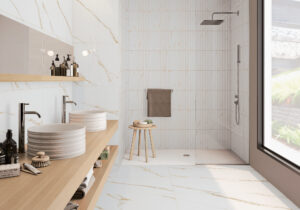
5 Questions You Must Answer Before Choosing Your New Flooring
By Metro Tiles & Flooring | Canada’s Trusted Tile & Flooring Experts
New flooring is one of the most exciting upgrades you can make to your home. It transforms how a room looks, how it feels underfoot, and — believe it or not — how it makes you feel every single day. But it’s also one of those decisions that homeowners rush into, only to find themselves frustrated six months later when the floors they loved in the showroom aren’t holding up to real life.
The truth is, the best flooring isn’t always the most beautiful one in the store — it’s the one that fits your life.
Before you fall in love with a floor, answer these five essential questions. They’ll save you money, prevent regret, and make sure that whatever you choose looks just as good five years from now as it does on day one.
Question 1: Where Are You Installing It — And What Does That Room Actually Go Through?
This might seem obvious, but it’s the question most homeowners answer too quickly. “It’s for the living room” isn’t a complete answer. The real question is: what does your living room actually endure on a daily basis?
Think about it honestly:
- Does morning light stream through large windows and heat up one side of the room?
- Do kids come in from the backyard and drop onto the floor with muddy knees?
- Does your dog pace the same path from the couch to the window forty times a day?
- Is it an open-concept space that bleeds into the kitchen, where spills are inevitable?
Room by room, the demands are different — and so is the right flooring.
Bathrooms and laundry rooms need waterproof flooring, full stop. Kitchens need something that laughs at spills and doesn’t fatigue your legs during a two-hour cooking session. Basements — especially in Canada — need moisture-resistant products that won’t buckle when spring humidity rolls in. Bedrooms are low-traffic sanctuaries where comfort and warmth take priority over heavy-duty durability.
Here’s a quick room-by-room guide to point you in the right direction:
| Room | Top Priority | Top Flooring Picks |
|---|---|---|
| Basement | Waterproofing, moisture resistance | SPC Vinyl, Porcelain Tile |
| Bathroom | 100% waterproof | Porcelain Tile, LVP Vinyl |
| Kitchen | Spill resistance, comfort underfoot | Porcelain Tile, LVP Vinyl |
| Mudroom / Entryway | Durability, easy cleaning | Porcelain Tile, SPC Vinyl |
| Living Room | Aesthetics, comfort, durability | Hardwood, Laminate, LVP Vinyl |
| Bedroom | Warmth, comfort, quiet | Hardwood, Carpet, Laminate |
| Home Office | Scratch resistance, professional look | Laminate, LVP Vinyl, Hardwood |
| Outdoor Patio | Freeze-thaw resistant | Porcelain Tile only |
The takeaway: Don’t shop for flooring and then figure out where it goes. Start with the room, understand what it demands, and let that guide your shortlist.
Question 2: Who — and What — Is Living in Your Home?
Your flooring isn’t just for you. It’s for everyone and everything sharing your space — and they all have opinions, whether they can voice them or not.
Do you have young children? Kids are flooring’s greatest stress test. They drop things, spill things, drag toys across floors, and occasionally treat your living room like a crash mat. You need a floor that is scratch-resistant, easy to clean, and forgiving of the unexpected. Hard surfaces like tile and luxury vinyl are far easier to sanitize than carpet. Softer surfaces like cork or carpet offer cushioning for tumbles — but at the cost of durability and stain resistance.
Do you have pets? Dogs and cats are wonderful. They are also tiny, enthusiastic floor-wrecking machines. Claws scratch. Accidents happen. Shedding is relentless. If you share your home with animals, look for flooring with a high scratch-resistance rating and a waterproof or water-resistant surface. Luxury Vinyl Plank and porcelain tile are consistently top-rated choices for pet owners. Hardwood — particularly softer species like pine — can show scratching over time.
Do you or a family member have allergies or respiratory sensitivities? Carpet is a beautiful, cozy option — but it’s also a reservoir for dust mites, pet dander, pollen, and mold spores. If allergies are a concern in your household, hard surface flooring like tile, vinyl, or hardwood is significantly easier to keep allergen-free and is recommended by many health professionals.
Are there elderly family members or anyone with mobility concerns? Slip resistance and surface stability become critical considerations. Highly polished tiles can be dangerously slick when wet. Thicker, floating-floor products can have slight flex that affects walker or wheelchair stability. Discuss your situation openly with a flooring specialist so they can recommend products with appropriate slip ratings and installation methods.
The takeaway: The best flooring for a single professional in a downtown condo is very different from the best flooring for a family of five with two dogs in a suburban home. Know your household. Shop accordingly.
Question 3: What’s Your Real Budget — Including Installation?
Let’s have an honest conversation about money, because this is where a lot of flooring projects go sideways.
When homeowners see a price tag of $3.00 per square foot on a beautiful laminate floor, they do the quick math — 1,000 square feet, so $3,000 — and feel great. Then the final invoice arrives and it’s nearly double what they expected. What happened?
Flooring has layers of cost that go beyond the material price:
- Underlayment — required under most floating floors for sound absorption, moisture protection, and comfort
- Professional installation — typically $2–$5 per square foot depending on product and complexity
- Subfloor preparation — levelling, patching, or replacing a damaged subfloor can add significant cost
- Removal and disposal — ripping out old flooring and hauling it away isn’t free
- Transition strips and trim — the finishing details that make a project look polished
- Furniture moving — some installers include this; others charge extra
A realistic rule of thumb: budget 40–60% above the material cost to cover installation and related expenses. So that $3.00/sq ft floor? Plan for $5.00–$6.00/sq ft all-in.
Here’s a general sense of installed costs in Canada (CAD) for common flooring types:
| Flooring Type | Estimated Installed Cost (per sq ft) |
|---|---|
| Ceramic Tile | $6 – $14 |
| Porcelain Tile | $8 – $20+ |
| Luxury Vinyl Plank (LVP) | $5 – $12 |
| Laminate | $5 – $10 |
| Engineered Hardwood | $8 – $18 |
| Solid Hardwood | $10 – $25+ |
| Carpet | $4 – $10 |
Prices vary by region, product quality, and project complexity. Request a detailed quote before committing.
One more thing: don’t let budget be the only filter. The cheapest floor and the best value floor are rarely the same thing. A slightly higher upfront investment in a durable, long-lasting product almost always costs less over a 10-year horizon than replacing a budget floor twice.
The takeaway: Know your total budget — not just the material budget. Get detailed quotes that include all the line items. And think in decades, not just dollars today.
Question 4: How Much Maintenance Are You Actually Willing to Do?
Be honest with yourself here. We’ve all had the best intentions about home maintenance — and we’ve all watched those intentions fade about three weeks after moving in.
Different flooring types demand very different levels of ongoing care, and choosing a floor that doesn’t match your real-life maintenance habits is a recipe for a floor that looks tired and neglected within a few years.
Low maintenance — set it and almost forget it: Porcelain and ceramic tile top this list. Sweep, mop occasionally, reseal the grout every year or two, and your tile will look pristine for decades. Luxury vinyl plank is similarly effortless — sweep or vacuum regularly, damp mop as needed, done.
Moderate maintenance — rewarding if you stay on top of it: Laminate looks great with regular sweeping and occasional damp mopping — but it hates standing water, so spills need to be wiped promptly. Engineered hardwood needs similar discipline around moisture and benefits from occasional refinishing of the wear layer.
Higher maintenance — beautiful, but demanding: Solid hardwood is the crown jewel of flooring, but it requires more care. It needs to be refinished periodically, is sensitive to humidity fluctuations (very relevant in Canada), and requires prompt attention to any spills or scratches. Natural stone — marble, travertine, slate — is stunning but porous and requires regular sealing and careful pH-neutral cleaning products.
Carpet — a different kind of commitment: Carpet needs vacuuming at least weekly, professional deep cleaning every 12–18 months, and prompt stain treatment. In homes with kids and pets, it can look worn and stained within a few years without consistent care.
Ask yourself: How often do I actually mop? Am I the person who cleans up spills immediately, or do I get to it “later”? Will I remember to reseal grout annually?
The takeaway: Match your flooring to your real habits, not your aspirational ones. A low-maintenance floor that looks beautiful year after year is far more valuable than a high-maintenance floor that looks stunning for six months and tired for the next ten years.
Question 5: Are You Thinking About Resale Value and Long-Term Investment?
Your home is likely one of the largest financial assets you own. The flooring you choose affects not just your daily quality of life — it affects what a buyer thinks of your home the moment they walk through the front door.
Flooring is one of the first things buyers notice, and it’s one of the things most likely to either seal the deal or send them walking. Here’s how common flooring choices are typically perceived in the Canadian real estate market:
Hardwood — the gold standard for resale. Real estate agents consistently report that hardwood floors are one of the top features buyers ask for. They signal quality, craftsmanship, and longevity. If your budget allows and your lifestyle is compatible, hardwood is an investment that pays back.
Porcelain and ceramic tile — a strong value-add in kitchens and bathrooms. Updated tile in these rooms is one of the highest-ROI renovations you can make. Buyers notice tired, dated, or cracked tile immediately — and they notice fresh, beautiful tile just as quickly.
Luxury Vinyl Plank — increasingly respected by buyers. As LVP quality has improved dramatically, so has buyer perception. High-quality LVP is now widely accepted and appreciated, particularly in moisture-prone areas where hardwood wouldn’t be appropriate.
Laminate — depends on quality. Premium laminate can look excellent and leave buyers impressed. Low-quality or poorly installed laminate, however, can make a home feel budget-finished — even if everything else is well-done.
Carpet — declining in favour for main areas. While carpet still has a place in bedrooms, buyers in most Canadian markets actively prefer hard surface flooring in main living areas. If you’re pre-selling, replacing dated or worn carpet with a hard surface can meaningfully increase buyer interest.
Also consider continuity. Flowing the same flooring material through multiple connected rooms makes a home feel larger, more cohesive, and more thoughtfully designed — all of which resonate with buyers.
The takeaway: If you’re planning to sell within 5–10 years, think about what resonates with buyers in your local market — not just what you personally love. Your flooring specialist can offer valuable guidance on what’s trending and what adds lasting value in your area.
Bonus: The Question Underneath All the Questions
There’s actually one more question that ties everything together, and it’s the simplest of all:
Are you working with a flooring expert you trust?
The five questions above are a framework — but every home is different, every family is different, and the nuances matter. The right flooring specialist will ask you the right questions, listen carefully to your answers, walk you through options you may not have considered, and help you avoid the common (and costly) mistakes that trip up even experienced renovators.
At Metro Tiles & Flooring, this is exactly what we do — every single day, for homeowners just like you. We don’t just sell flooring. We help you make a decision you’ll feel great about for years to come.
Ready to Answer These Questions Together?
You don’t have to figure this out alone. Our flooring specialists are here to guide you through every consideration — from room conditions and lifestyle needs to budget planning and product selection.
🏪 Visit our showroom at 72 Devon Road, to touch and feel hundreds of porcelain and ceramic tile samples in every style imaginable.
📐 Book a free consultation — https://metrotilesandflooring.com/get-a-free-quote/
🚚 We supply and install — one trusted team from selection to grouting.
💬 Have a question? Call us today at (905) 450 – 0001
The right floor starts with the right questions. We’ve got answers.